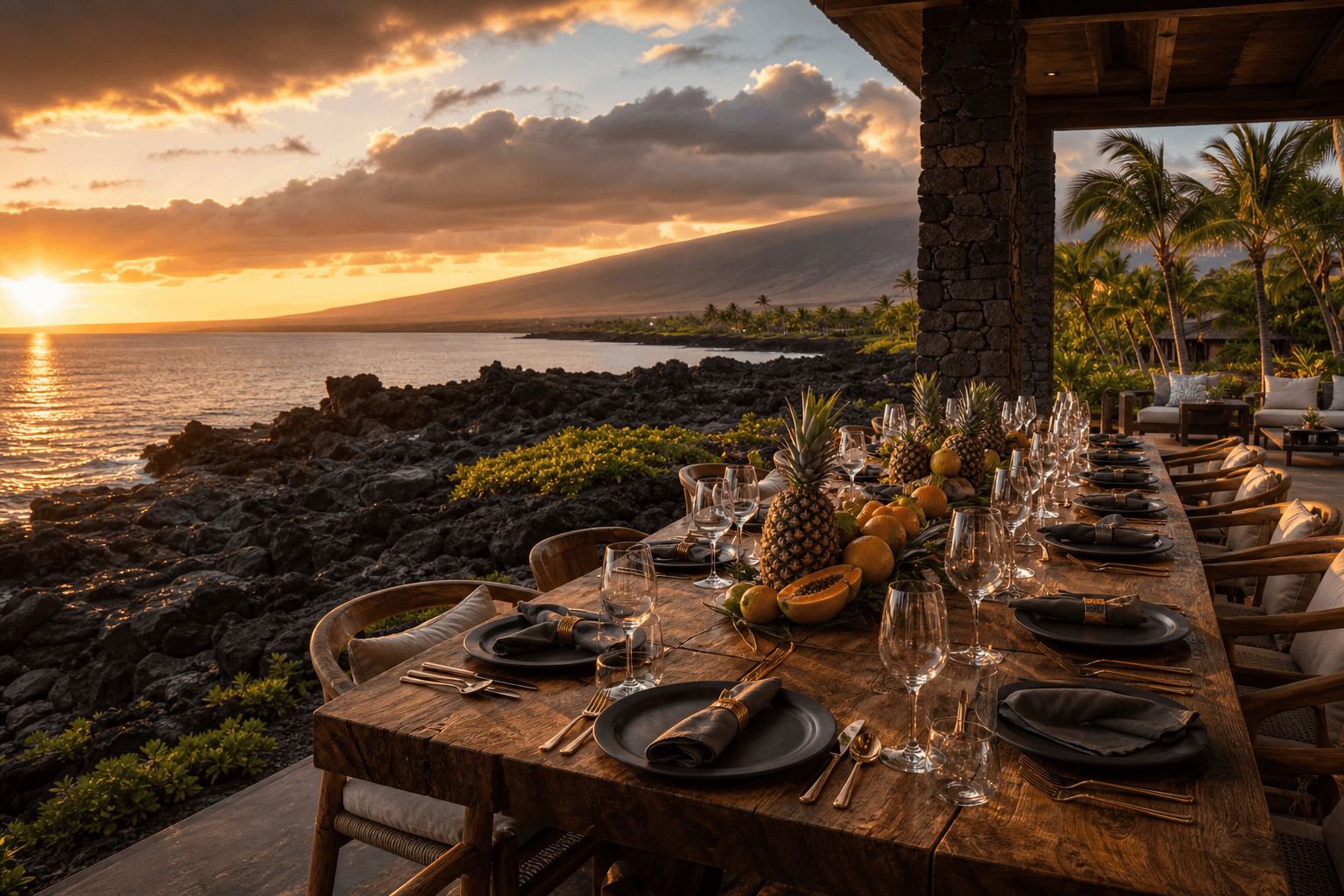
Why Maunakea is special
Maunakea rises to 13,796 feet, and its summit holds some of the world’s major observatories. The high altitude, dry air and dark skies make it one of the best places on Earth to see the stars. It is also a sacred place in Hawaiian culture, and visitors are asked to stay on roads and trails, leave nothing behind and treat the mountain with respect.
For most visitors, stargazing happens at the Onizuka Center for International Astronomy Visitor Information Station, or VIS, at about 9,200 feet on the Maunakea Access Road. That is high enough to be above the clouds on most nights.
Stargazing at the Visitor Information Station
The VIS is open every day of the year from 9 a.m. to 9 p.m., and there is no entrance or parking fee. Many people drive up for sunset and stay as the stars come out. After twilight, when weather and staffing allow, VIS staff give a short laser-guided talk about the night sky, constellations and Hawaiian wayfinding.
There are no public telescopes at the VIS any more. The nightly telescope program ended in 2019 because of crowding and damage to the area. Instead, the VIS runs a free telescope event about once a month, with limited places and a reservation required. The next event open to the general public is set for Saturday, December 12, 2026, with registration opening on November 22 at noon Hawaiʻi time. Each party can book once per quarter, and events are cancelled in bad weather.
Summit rules and safety
The summit area is closed to visitors from 30 minutes after sunset until 30 minutes before sunrise. You can watch sunset from the top, but to stay for the stars you need to come back down below Park 2, near the VIS. Above the VIS, the road turns to steep gravel, and only dependable four-wheel-drive or all-wheel-drive vehicles are allowed. Check whether your rental car contract permits it.
The mountain’s official guidance is clear: do not go above the VIS if you are under 13, pregnant, have a heart or respiratory condition or high blood pressure, or have been scuba diving in the last 24 hours. Everyone should stop at the VIS for at least 30 minutes to adjust to the altitude. Alcohol, drones and pets are not allowed, and muddy vehicles are turned away to protect the mountain from invasive species.
Getting there, timing and what to bring
The Maunakea Access Road leaves the Daniel K. Inouye Highway, also called Saddle Road, at milepost 28. From the Kona side and the Kohala resorts, allow roughly an hour and a half to two hours each way. From Hilo it is closer. There are no gas stations or restaurants on the mountain, so fill up before you leave the coast.
It is cold up there. Temperatures near the VIS can be close to freezing after dark, especially in winter, so bring warm layers, a hat and something to sit on. Check the moon: a full moon washes out many stars, so the darkest nights are around the new moon. Check the mountain weather forecast on the day, as the summit road can close for ice, snow or high wind in winter.
Planning meals around a stargazing night
The hardest part of a stargazing night is food. If you leave the coast in the afternoon, watch sunset and stay for the stars, you may not be back at your villa until 10 or 11 p.m., long after most restaurants close. Pack water and snacks for the mountain, and plan dinner before or after rather than hoping to find something on the way.
Two plans work well. The first is a big, relaxed late lunch at the house before you leave, with a light supper waiting when you get back. The second is to make the stargazing night simple and hold the celebration dinner for the evening before or after. If you are staying in ranch country, our Waimea restaurants guide covers the town many people pass through on the way up.
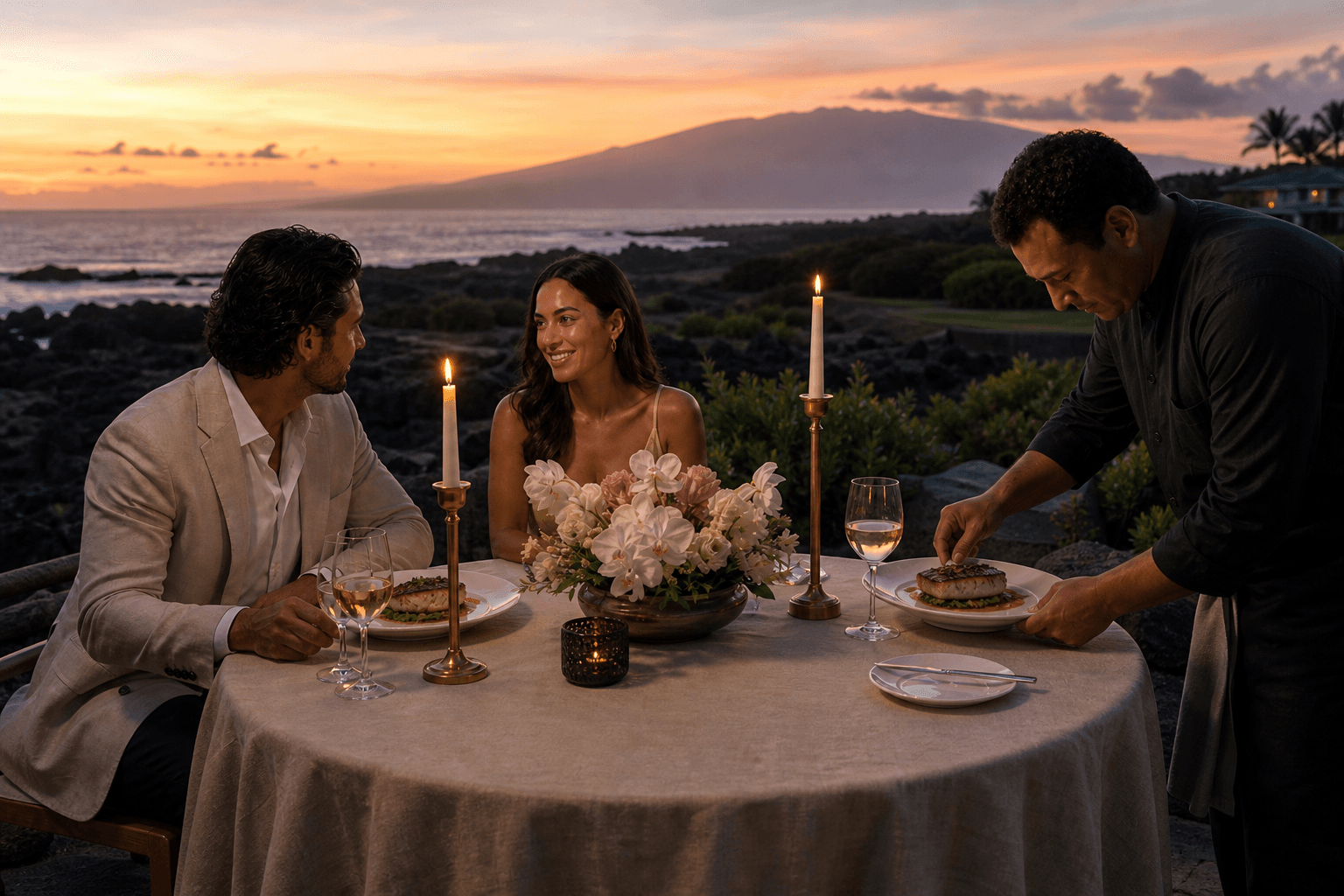
On a Stay Chef day we can plan the meals around your drive, and a private chef Kona dinner on another night of the trip is cooked, served and cleaned up at your villa. We confirm the timing in writing with the quote. For a group trip, a reunion or a retreat with more guests, Big Island catering adds servers and a sous-chef.
Stargazing from the coast
You do not have to drive up the mountain to see a good sky. Hawaiʻi County limits outdoor lighting to protect the observatories, and the Kohala Coast is dry and fairly dark away from the resort lights. After dinner, turn off the lānai lights and give your eyes a few minutes to adjust. On a clear, moonless night you can often see the Milky Way from the coast.
That makes an outdoor dinner on your terrace a good second-best for families with children under 13, who should not go above the VIS anyway.
What does a villa dinner cost with us?
Signature dinners on Hawaiʻi Island are published at $210–$325 a guest with groceries included, for a minimum party of six, and smaller table dinners start from $165 a guest. Stay Chef days start from $1,450 a day, with groceries billed at cost and receipts handed over. Addresses outside the Kona–Kohala corridor carry a published travel line from $75.
A 20% service charge and Hawaiʻi GET of up to 4.712% are their own lines, a 50% deposit locks the date and gratuity is voluntary. The full card is on Big Island private chef cost.
How to plan your stargazing week
Send the address, the dates, the guest count and any allergies through the quote form, or message us on WhatsApp at +1 808-468-7748, and tell us which night you plan to go up the mountain. We reply in writing with a menu direction and a total. For dinners anywhere on the west side, see private chef Big Island.