Where Hilo is, and why it feels different
Hilo sits on Hilo Bay on the east side of the island, the county seat and the island’s largest town. It is one of the wettest cities in the United States, which is why the gardens are so green and the waterfalls so full. It is also on the opposite side of the island from the Kona and Kohala resorts: crossing on the Daniel K. Inouye Highway, the old Saddle Road, is a drive of two hours or more each way.
Most visitors meet Hilo on a day trip, often combined with Hawaiʻi Volcanoes National Park, about 45 minutes up the road, or the waterfalls on the Hāmākua Coast. Others stay on the east side for the volcano, the rainforest and a quieter town.
What the Hilo food scene looks like
Hilo’s food reflects its plantation history, with Japanese, Chinese, Filipino, Portuguese, Korean and Hawaiian kitchens side by side. Expect plate lunch and saimin counters, poke, okazuya-style lunch, bakeries, mochi and manjū shops, shave ice, coffee and a few dinner restaurants in the historic storefronts of downtown and along the bayfront.
Hilo is widely credited as the birthplace of the loco moco, rice topped with a hamburger patty, a fried egg and gravy, and it is still on menus all over town. Prices are generally lower and portions bigger than at the west-side resorts.
The Hilo Farmers Market and morning food
The Hilo Farmers Market downtown is one of the best-known markets in Hawaiʻi. Wednesdays and Saturdays are the big days, with farmers, flowers, prepared food and crafts, and there are smaller vendor days in between. Go early for tropical fruit such as papaya, apple bananas, dragon fruit, avocados and, in season, lychee and rambutan.
Hilo is also a breakfast town. Many of the local favorites open early and close by mid-afternoon, so a market morning with breakfast downtown is one of the easiest ways to eat well here. Our Kona farmers market guide covers the markets on the other side of the island.
Dinner in Hilo: rain, early nights and closed days
Hilo goes to bed early. Several restaurants close in the mid-evening and some close one or two days a week, so check before you drive, and book the sit-down rooms where you can. Rain is often heaviest in the afternoon and at night, so a covered table or an indoor room is the safer plan.
During the Merrie Monarch Festival, the week-long hula festival held in Hilo each spring starting on Easter Sunday, the town is full and tables and rooms book up well ahead.
Hilo as a day trip from the Kona side
If you are staying in Kona or on the Kohala Coast, treat Hilo as a full day: breakfast or lunch in town, the market if it is a market day, the waterfalls or the national park, then the long drive back. Plan dinner on the way or back on the west side, and do not count on the drive taking less time in the dark or in rain on the upper Saddle Road.
Our Kona restaurants guide and Waimea restaurants guide cover the stops on the west side and the northern route back.
Staying on the east side: houses and kitchens
East-side stays are mostly houses, cottages, bed and breakfasts and the hotels along Banyan Drive, plus rainforest houses around Volcano. Kitchens vary from full family kitchens to small cottage galleys, and many houses have a covered lānai rather than an open terrace, which matters in Hilo rain.
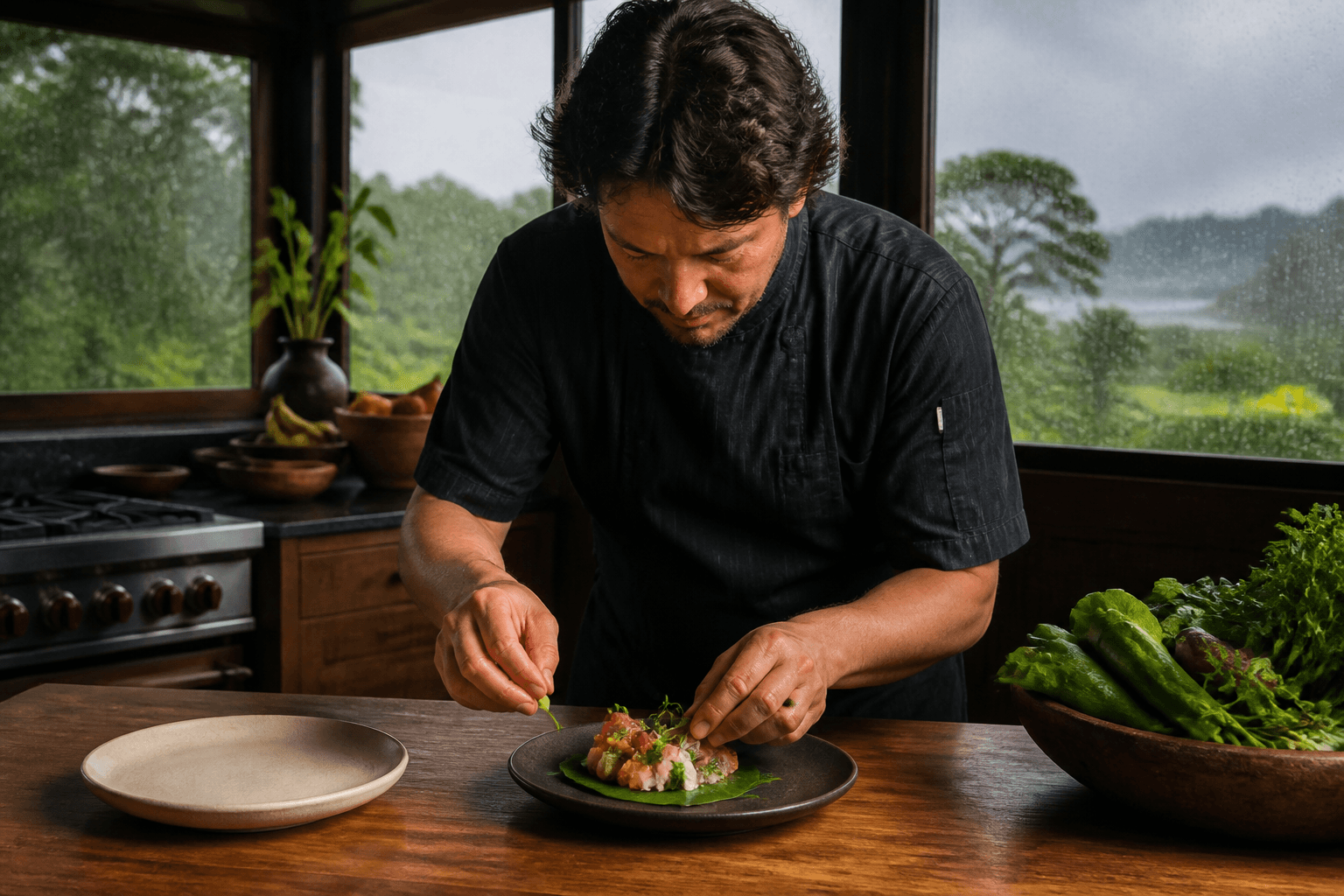
For us, Hilo and Volcano are a dedicated east-side day, quoted in writing and never squeezed into a west-side day. Our private chef Hilo and east side pages explain how that works.
When a chef dinner at the house beats eating out
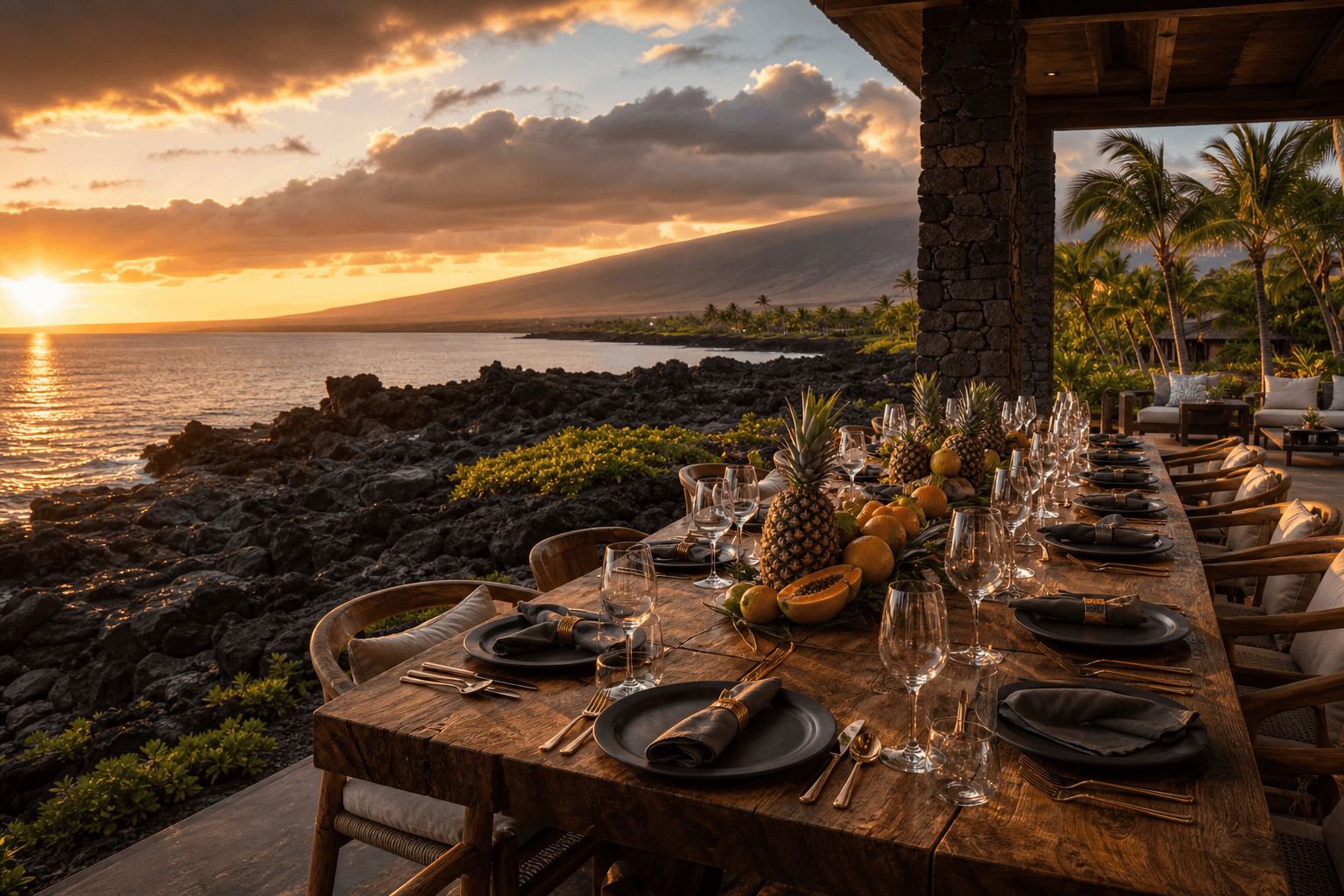
A rainy evening, a big family, small children, mixed diets, a birthday or a reunion all point the same way. A dinner at the house means one long table under cover, no parking in the rain and nobody driving afterwards.
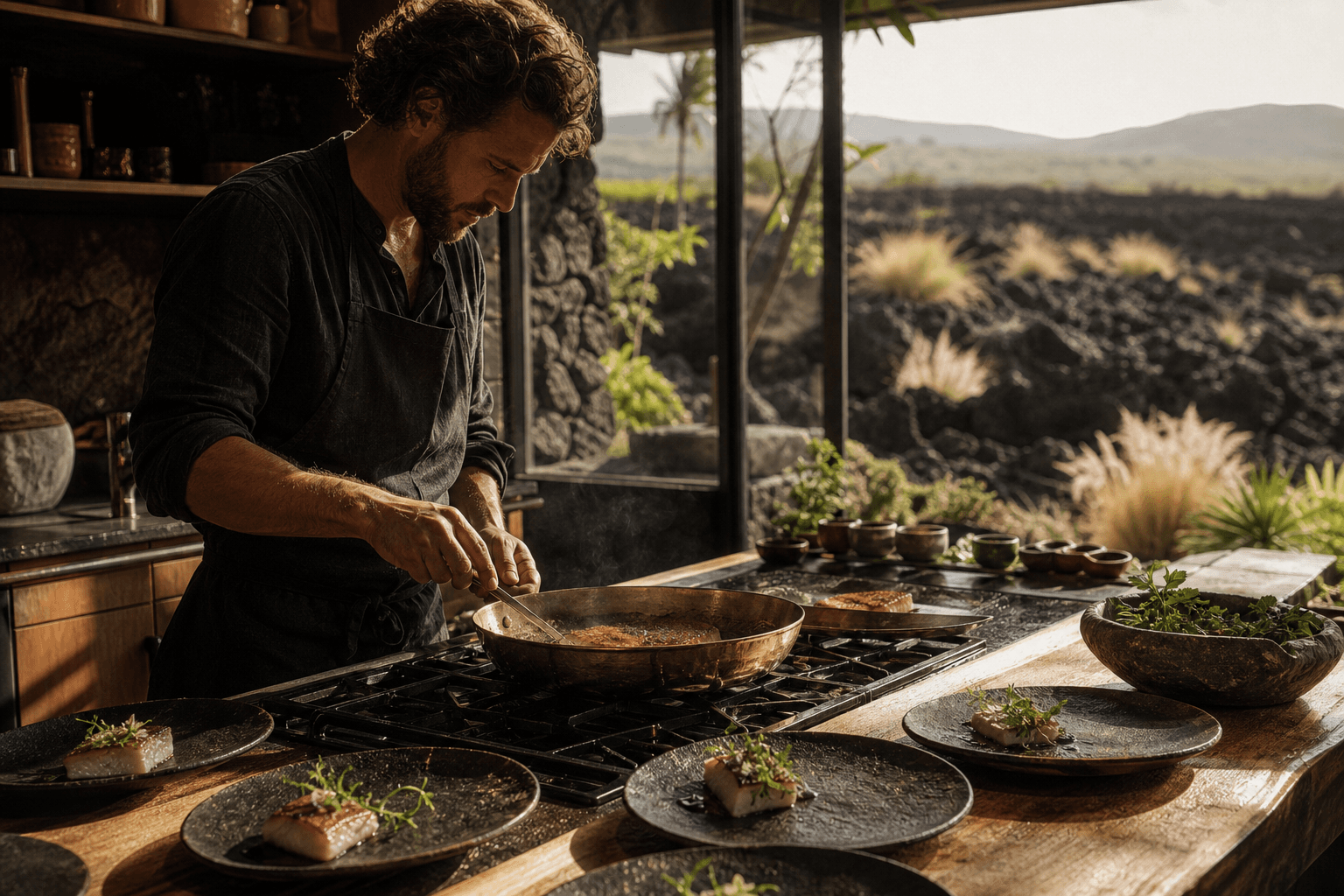
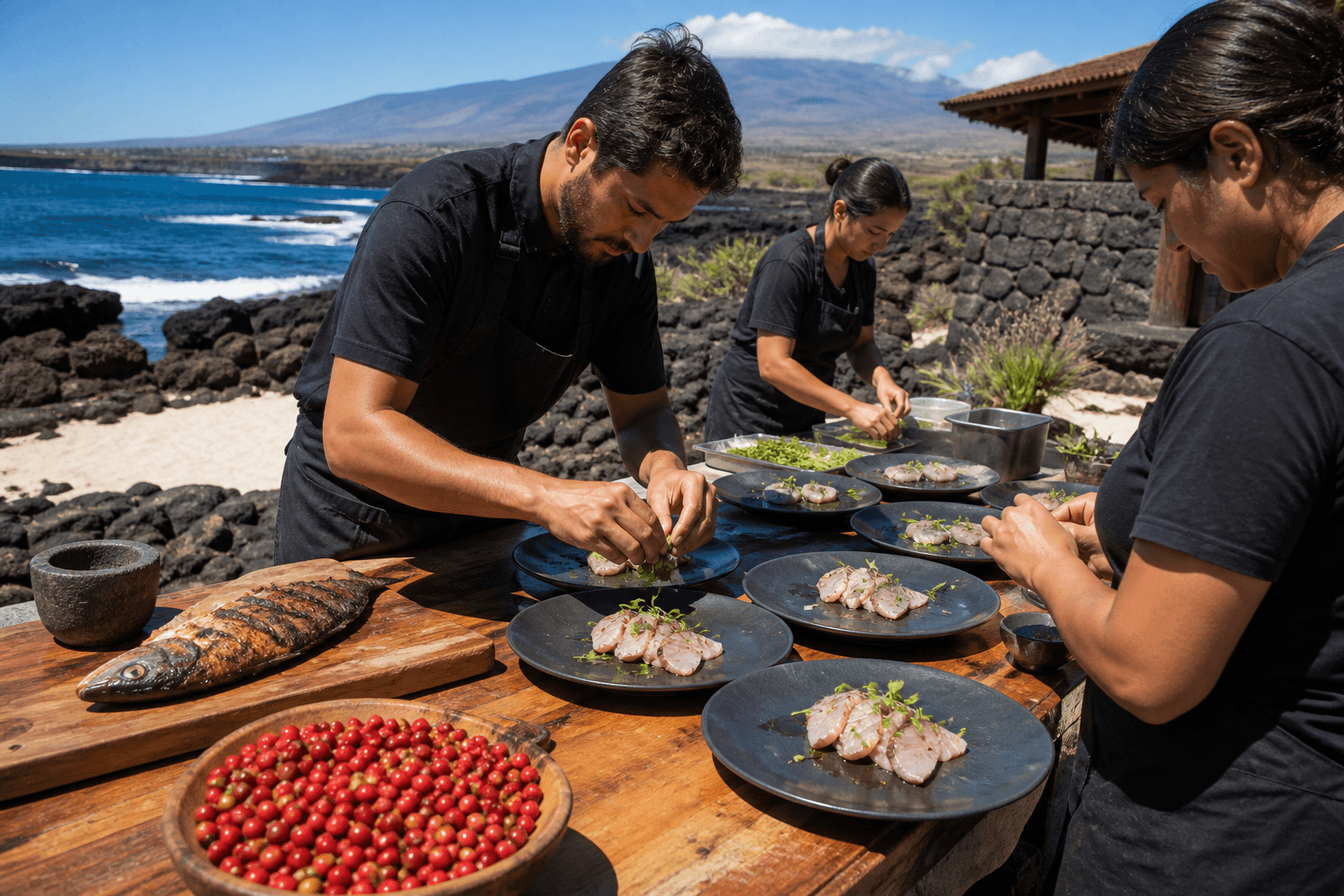
Our private chef Kona service is built around the west side, and the same kitchen-to-table model applies on an east-side day: the chef plans the menu with you, shops, cooks, serves and leaves the kitchen clean. Local fish is named as the species we actually bought, and we only name a farm after we have verified it in writing.
Bigger groups and events
For 10 to 75 guests, Big Island catering covers staffed villa events, built around the Kona–Kohala coast, with servers at $80 an hour and a sous-chef at $105 an hour on four- to five-hour minimums as their own lines. An east-side event is quoted as its own dedicated day. Tables, linens and tents are not included unless you ask for them.
What a dinner at your house costs with us
Signature dinners on Hawaiʻi Island are published at $210–$325 a guest with groceries included, for a minimum party of six, and a simpler table starts from $165 a guest. Dinner for two starts from $825. Stay Chef days for a chef and an assistant start from $1,450 a day for one meal, with groceries billed at cost. Travel outside the Kona–Kohala corridor starts from $75, and the east side is quote-only.
A 20% service charge and Hawaiʻi GET up to 4.712% are added as their own lines, a 50% deposit locks the date and gratuity is voluntary. The full rate card is on Big Island private chef cost. Hawaiʻi Island is by inquiry, so the written quote is the confirmed total once a chef is confirmed for your date.
How to plan your Hilo nights
Send the house address, the dates, the number of adults and children, allergies and the nights you want cooked, and tell us if you also want a west-side night. Use the inquiry form or WhatsApp at +1 808-468-7748, and we reply in writing. For villa dinners across the island, see private chef Big Island.