How does a manta ray night snorkel work?
Boats anchor or moor at the viewing site around dusk. Guests in wetsuits, mask and snorkel hold on to a floating board or ring fitted with lights pointing down. The light draws plankton, and manta rays glide up from below to feed, often turning loops just under the snorkelers. Divers sometimes sit on the bottom with their own lights at the same time.
You stay at the surface and keep still. Kicking, diving down or reaching out disturbs the animals and the people around you. Sightings depend on the night; mantas are wild animals, and operators set their own policies for nights with no rays.
The two sites: Makako Bay and Keauhou Bay
The state recognizes two manta viewing areas in West Hawaiʻi. Makako Bay, known as Garden Eel Cove in daylight, sits off the Kona airport, and boats usually leave from Honokōhau Harbor north of town. Kaukalaelae Point at Keauhou Bay is south of Kailua-Kona, and boats leave from Keauhou Bay itself, a short ride away.
Neither is better in any way you can verify before you go. What changes your evening is the drive to the harbor and the length of the boat ride. If you are staying on the Kohala Coast, Honokōhau is closer; if you are in Keauhou or south of town, Keauhou Bay is. Our Kona restaurants guide explains how the town and Keauhou fit together.
What are the rules?
Hawaiʻi law makes it illegal to knowingly capture, take, possess, abuse, entangle or kill a ray in state marine waters. That means no touching, chasing or riding the mantas, even if one bumps into you.
In October 2022 the state land board approved starting rulemaking for the two Kona manta viewing zones, with proposed limits on permits, shifts, passengers and guide ratios. Those rules are still a draft, not law. Until they are adopted, the number of boats and the conduct on them depends on the operator you choose, so ask about group size, guide ratio and their policy on touching and diving.
Who is the trip right for?
You need to be comfortable in open water at night. Operators set their own swimming requirements; some ask you to swim a set distance without flotation and climb a boat ladder unaided, and some do not allow non-swimmers in the water. Ask about age limits for children, wetsuit sizes, and whether a ride-along place is available for anyone who wants to watch from the boat.
Seasickness is the other common problem. The boat sits still at the site, and the swell can be noticeable on the way out and back. If anyone is prone to it, eat lightly and ask whether the trip is short or long.
What to bring and how to time the day
Bring a towel, a warm layer for the ride back, a dry bag for phones and car keys, and any medication you need. Wetsuits and gear are usually provided. Eat something light a couple of hours before, and plan a calm day before the trip: a morning at the beach is fine, a long hike up Mauna Kea in the afternoon is not.
Trips are timed around dusk, with twilight departures and later ones. Expect to be back at the harbor in the evening, wet, cold and very hungry, with a drive home still ahead.
Dinner before or after the manta trip?
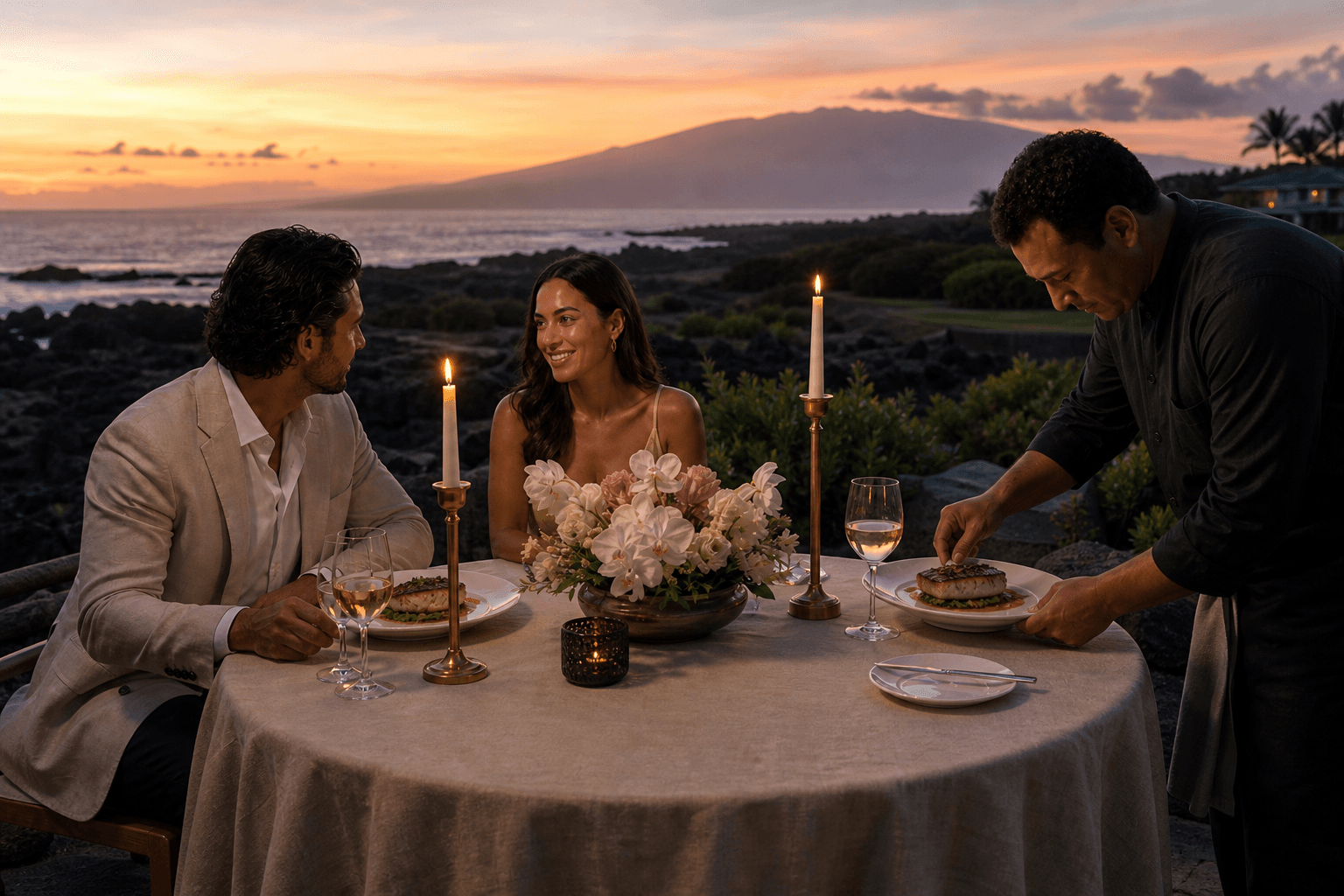
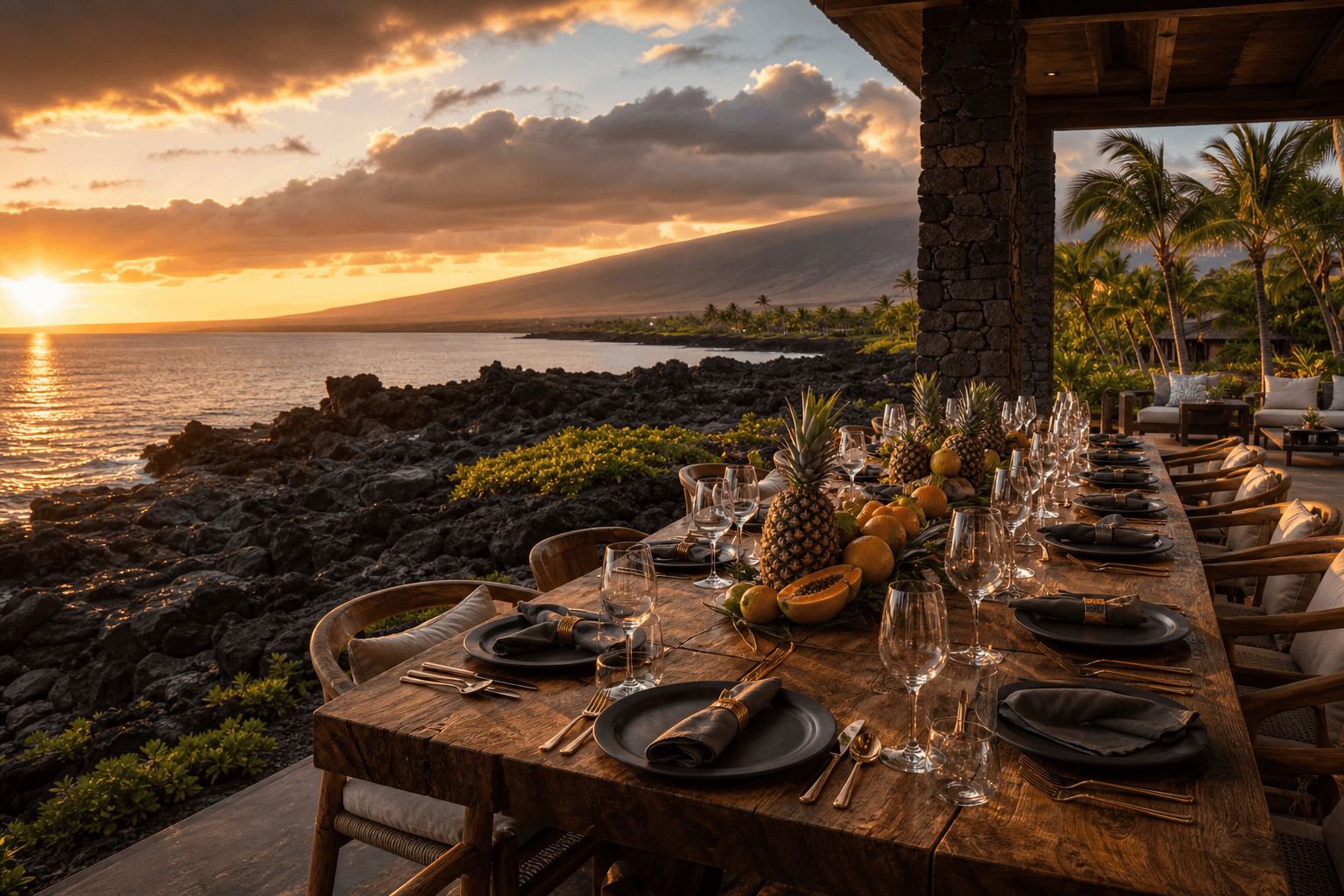
On an early twilight trip, a late dinner after works well. On a later trip, a light early meal before and something warm when you get home is usually better than a full restaurant dinner. Many Kona dining rooms take their last seatings before late boats come back, and a group of eight in wet hair rarely wants to dress for a reservation.
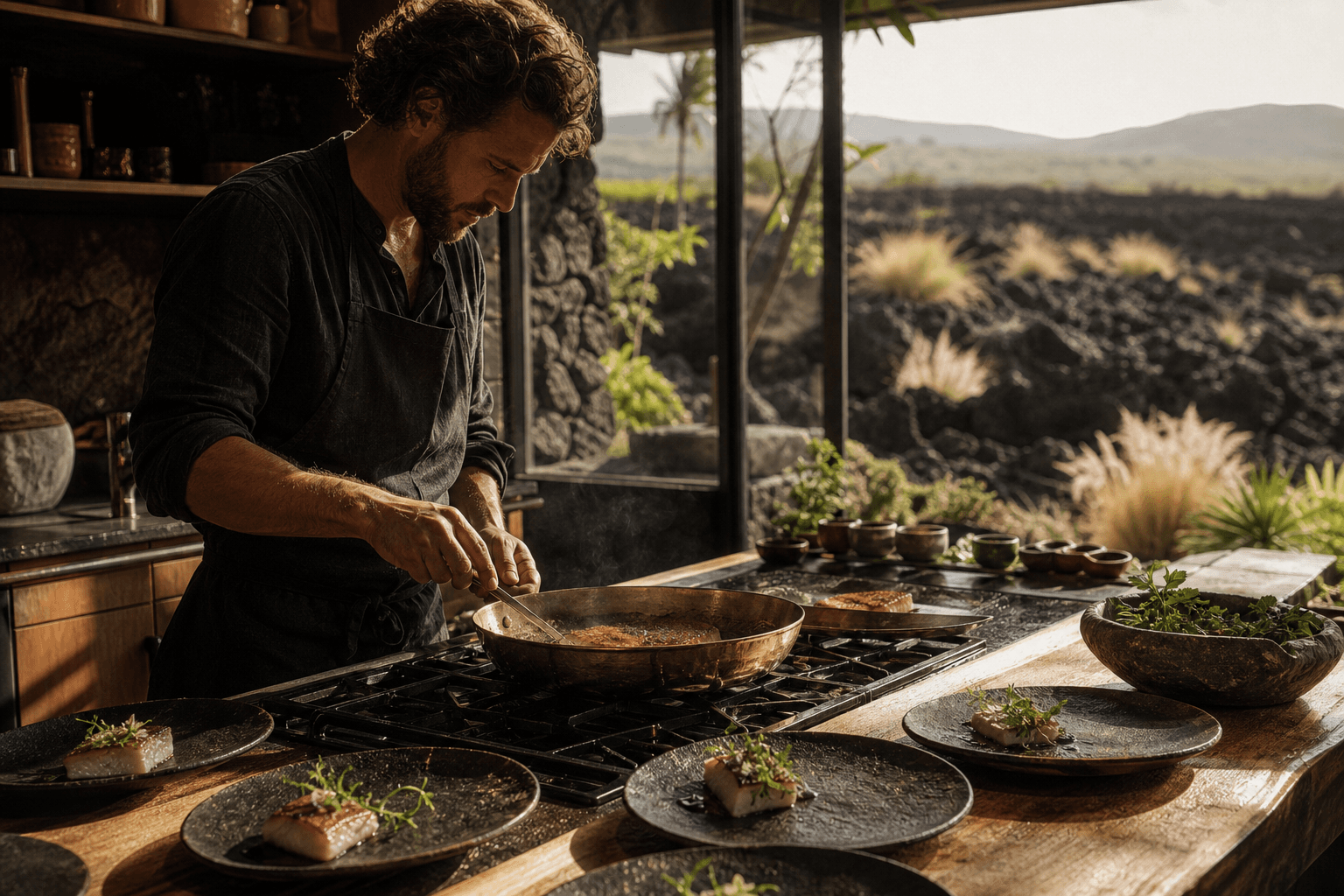
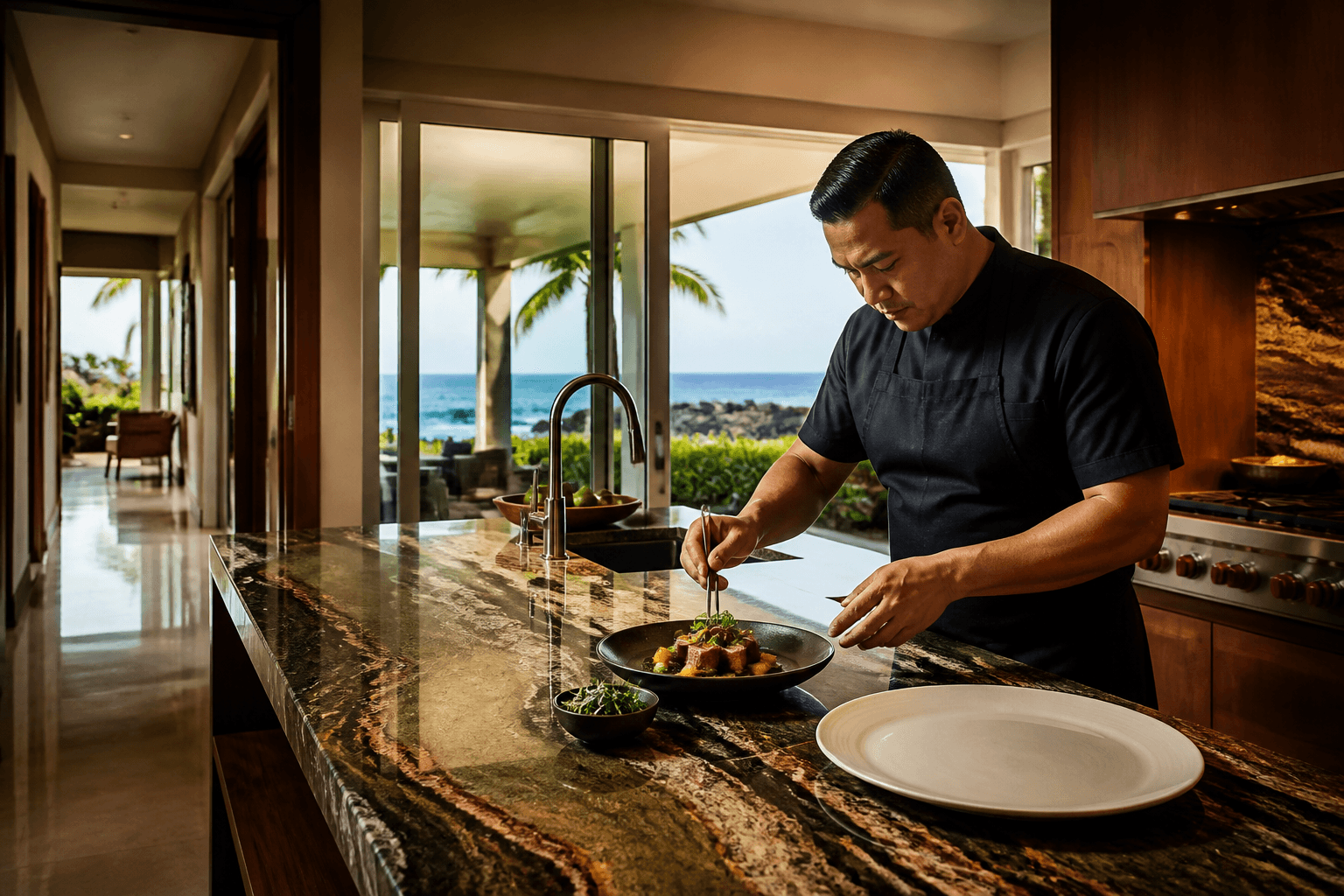
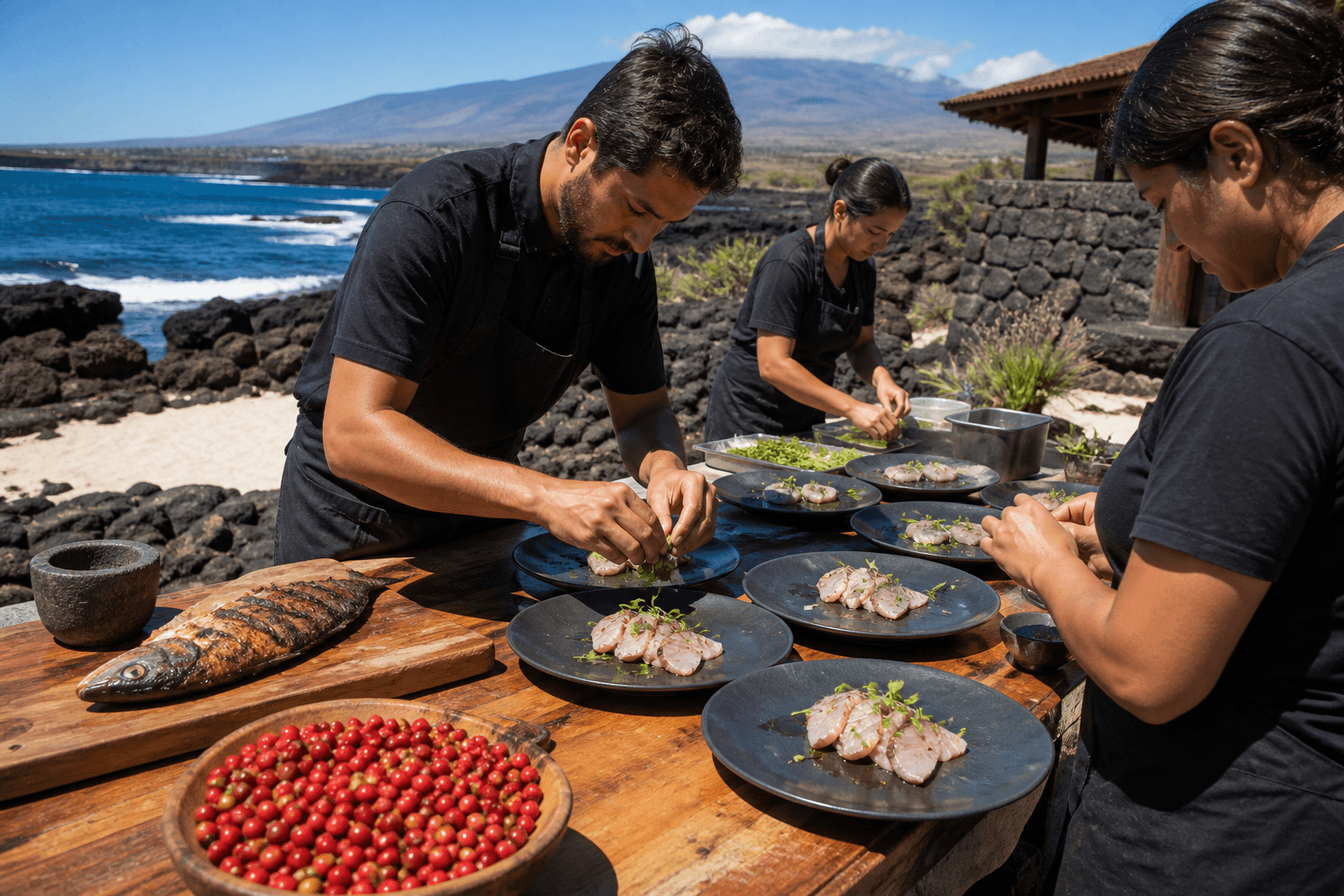
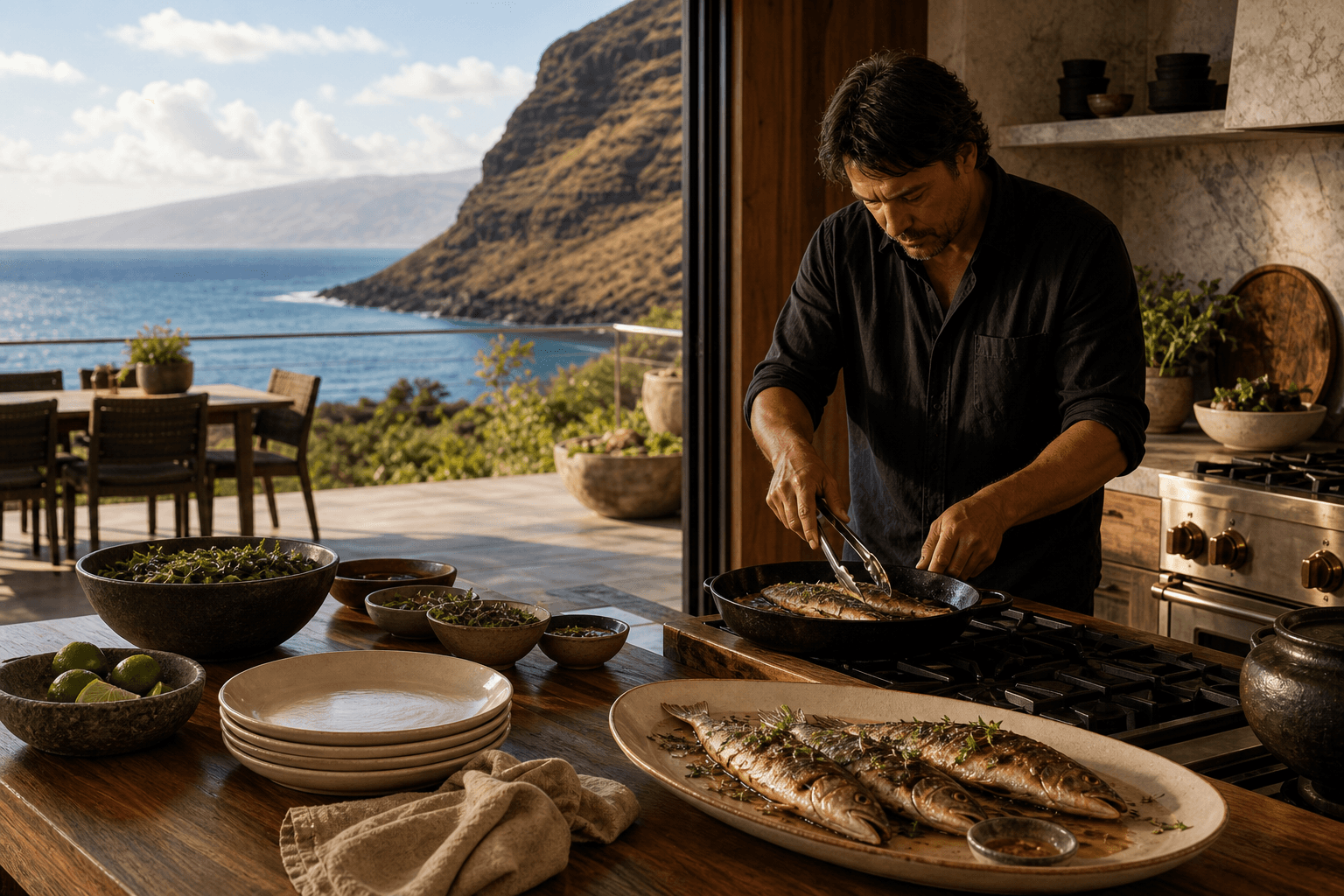
This is where a dinner at the house helps. A private chef Kona evening can be timed to your boat: a light early plate before you leave, or a warm dinner ready when you walk back in. It is planned with you, shopped that day, cooked in your villa kitchen, and the kitchen is cleaned before we leave. Our Keauhou private chef page covers dinners near the southern harbor.
If the trip is cancelled or the mantas do not show
Operators cancel when wind or swell makes the site unsafe, and some nights the rays simply do not come. Book the manta trip early in your stay so there is room to rebook, and read the operator’s policy on refunds and repeat trips before you pay. Keep the dinner plan flexible too: a chef night can usually move to another evening if you tell us early.
Other good evenings on the Kona side need no boat at all: sunset from a lānai, a walk along Aliʻi Drive in Kailua-Kona, or stargazing on a clear night away from town lights.
Bigger groups and celebrations
Families and friends often book the manta trip for a birthday or a reunion week. When the guest list passes a dinner table, Big Island catering is the staffed version for roughly ten to seventy-five guests, with servers at $80 an hour and a sous-chef at $105 an hour on four- to five-hour minimums, each on its own line. Tables, linens, tents and rentals are not included unless you ask, and then they are quoted separately.
What does a Kona villa dinner cost with us?
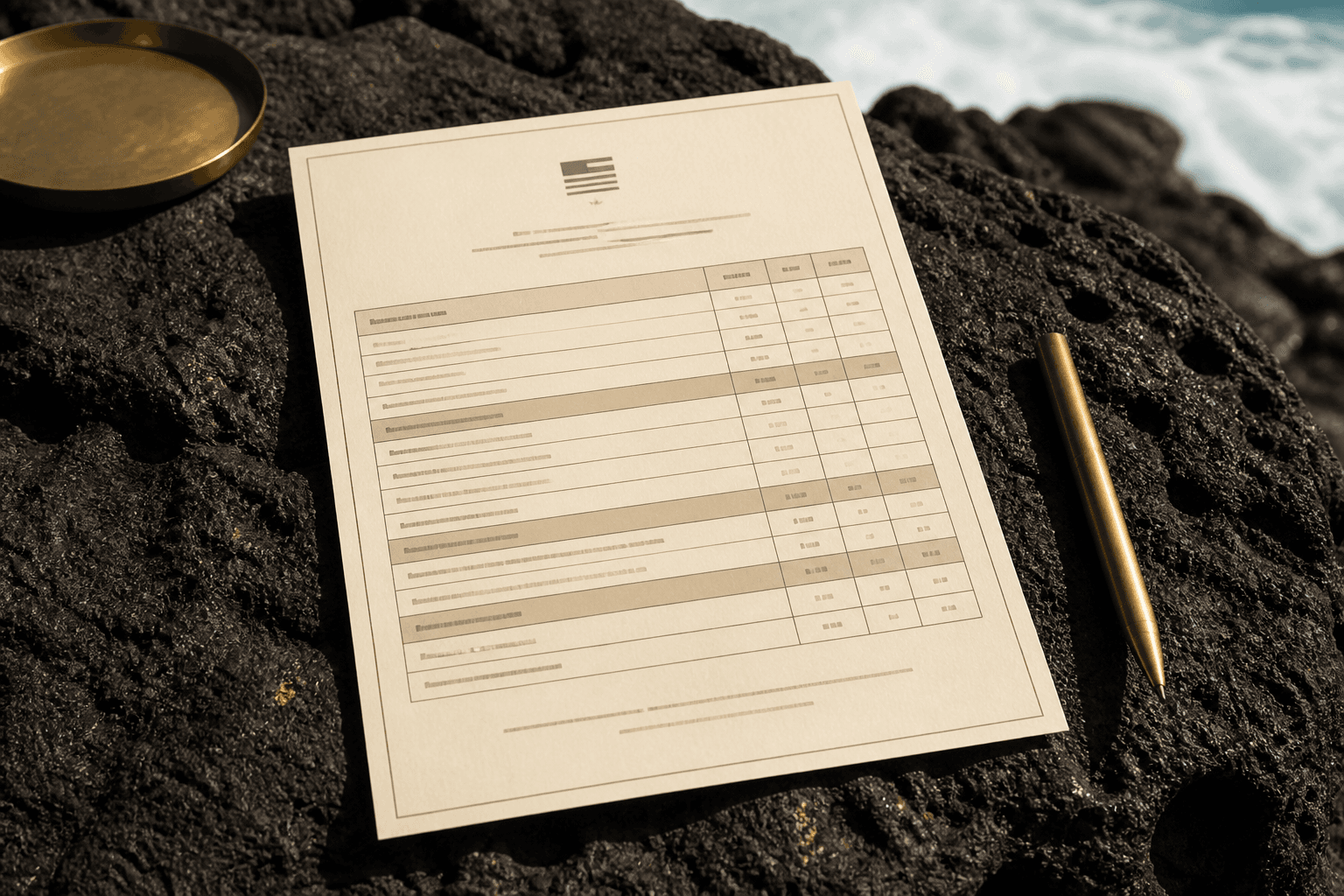
Signature dinners on Hawaiʻi Island are published at $210–$325 a guest with groceries included, for a minimum party of six, and smaller dinners start from $165 a guest. Chef days start from $1,450. Addresses outside the Kona–Kohala corridor carry a published travel line from $75. A 20% service charge and Hawaiʻi GET of up to 4.712% are their own lines, a 50% deposit locks the date and gratuity is voluntary. The full card is on Big Island private chef cost. Hawaiʻi Island is by inquiry.
How to plan your manta night
Send the villa address, your dates, the guest count, the time your boat leaves and any allergies through the inquiry form, or message us on WhatsApp at +1 808-468-7748. We reply in writing with a menu direction and a total, timed to your trip. For dinners anywhere on the island, see private chef Big Island.